How Owned Retail Is Reshaping Designer Growth
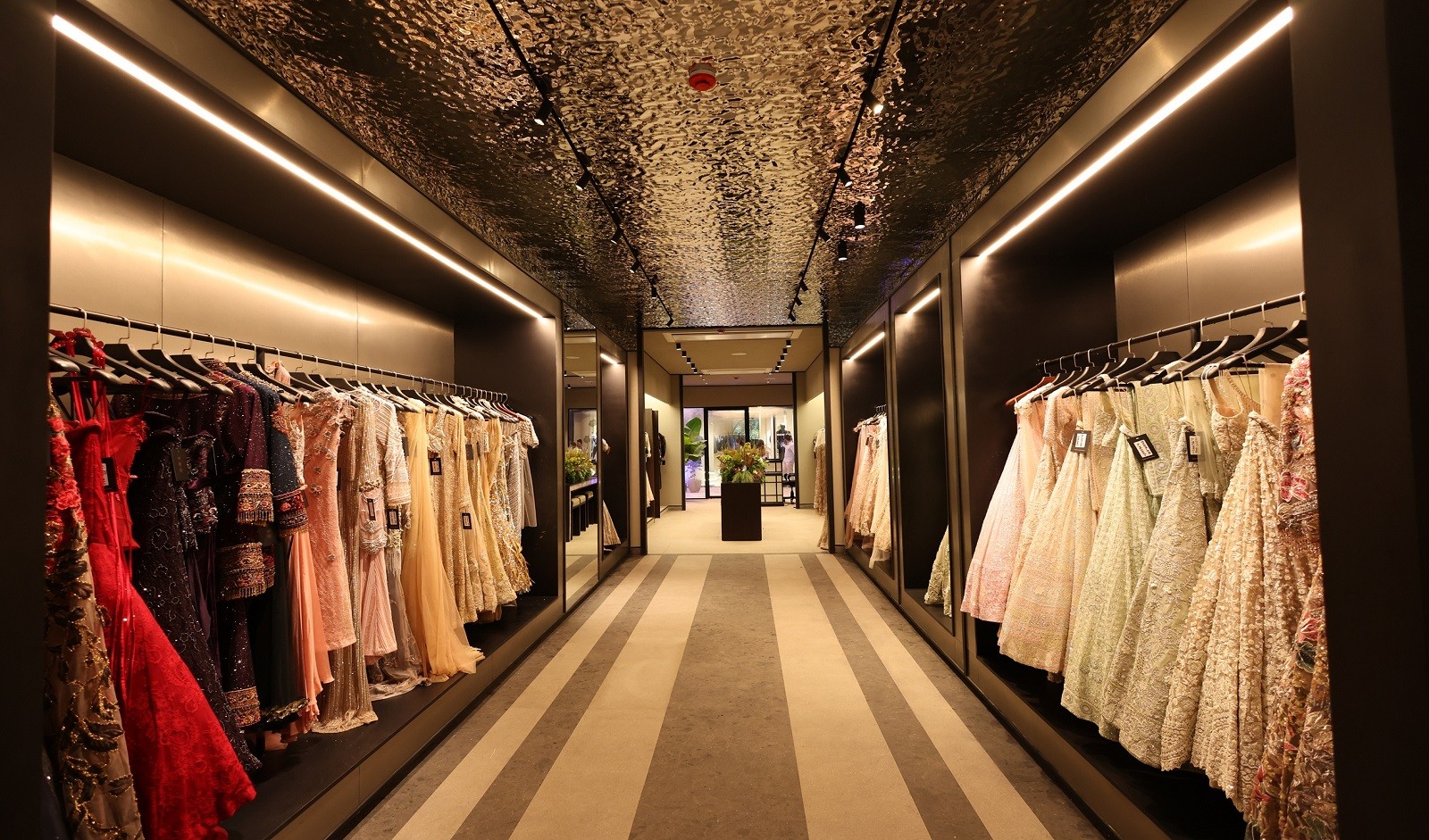
India’s luxury fashion industry is entering a new growth phase, with designers increasingly investing in flagship stores to gain greater control over brand storytelling, customer engagement, and long-term scalability.
By Vaishnavi Gupta, Associate Editor
Feb 04, 2026 / 13 MIN READ


India’s luxury fashion industry is witnessing a strategic reset. After years of relying on fashion weeks, pop-ups, and multi-designer boutiques to build visibility, leading designers are now investing in flagship stores as a long-term growth engine. Across key luxury hubs such as Dhanmill, Mehrauli, and DLF Emporio in New Delhi, designers are opening permanent, owned retail spaces that allow them to control brand narrative, deepen customer relationships, and scale with intent.
This shift reflects a maturing designer ecosystem—one where physical retail is no longer viewed as a cost-heavy obligation, but as a powerful tool for differentiation, data, and direct consumer engagement.
From Wholesale to Ownership: A Strategic Shift
For decades, multi-designer stores played a crucial role in nurturing Indian fashion brands. While they continue to remain relevant, designers are increasingly recognizing the limitations of shared retail environments—restricted storytelling, limited assortment depth, and reduced customer insight.
Flagship stores address these gaps by offering designers complete control over presentation, pricing, and service. More importantly, they enable brands to showcase the full breadth of their design universe—often impossible within the confines of a multi-brand format.
Luxury menswear designer Sarab Khanijou, who recently launched his flagship at The Dhanmill Compound in New Delhi, views his store as a strategic extension of his design philosophy rather than a conventional retail outlet. “This store is more than a retail space. It is a stage where craftsmanship, drama, and modern elegance come alive. I wanted to create an experience where every garment tells a story, and every client feels like the protagonist,” he said.
Designed as an immersive environment, the 1,200 sq. ft. flagship brings together wedding couture, occasion wear, and ready-to-wear, while also offering bespoke services such as groom consultations, archival access, and custom tailoring—strengthening the brand’s direct-to-consumer engagement.
Experience-Led Retail Takes Centre Stage
Today’s luxury consumer is seeking more than product—they are investing in experience, narrative, and emotional connection. Designers are responding by creating flagship stores that function as experiential spaces rather than transactional ones.
Designer Elisha Wadhwani, who has unveiled her first-ever flagship store at Dhanmill in New Delhi after more than two decades in the industry, sees physical retail as a platform for brand immersion and cultural expression.
“This store is the culmination of twenty years of dedication, experimentation, and evolution. Every piece I create is a dialogue between heritage and modernity. With this flagship, I wanted to give that dialogue a home—one that reflects bold individuality while celebrating the legacy of Indian craftsmanship,” stated Elisha Wadhwani, Creative Director.
Spanning over 1,000 sq. ft., the store is divided into curated zones for luxury pret, couture, and private lounging, allowing customers to move seamlessly between everyday power dressing and high-glamour evening wear.
Menswear Finds its Permanent Address
The rise of dedicated menswear flagships signals another important industry trend: the growing commercial and cultural significance of Indian menswear. Designer Gaurav Gupta recently opened his first-ever exclusive menswear flagship at DLF Emporio, New Delhi—a decisive move that positions menswear as a core pillar of the brand.
“This space reflects how I think about menswear today. It is fluid, sculptural, and introspective. The store becomes an extension of the Gaurav Gupta Man, where architecture and clothing exist in quiet conversation with one another,” asserted Gaurav Gupta.
Spread across approximately 2,300 sq. ft., the store is designed as a sculptural, gallery-like environment informed by the philosophy of Shunya—where emptiness is treated as potential. According to architect Karanbir Duggal, who collaborated on the project, “The concept of Shunya informed the way we shaped the space. Emptiness was treated as an active element, allowing the architecture to feel calm, intentional, and deeply immersive rather than visually dense.”
Bridal Couture and the Power of Consolidation
In the bridal and occasion wear segment, flagship stores are enabling designers to consolidate categories and offer end-to-end solutions to consumers. Mrunalini Rao’s newly opened flagship store in Mehrauli is a testament to this approach.
“I had been retailing in Delhi for a long time, but never had one big space to display my entire collection. I wanted a full space to showcase everything under one roof. That has been a dream for a long time,” said Mrunalini Rao.
The store houses bridal wear, couture, menswear, sarees, and accessories, catering to a wide price spectrum—from Rs 40,000 to Rs 6.5 lakh—while offering bespoke services for brides seeking personalized creations.
“Couture is something I put my heart and soul into. It’s not just lehengas with dupattas—we innovate a lot with embroideries and silhouettes while keeping Indian craft at the core,” Rao added.
Flagships as Brand-Building Assets
Beyond sales, designers increasingly view flagship stores as long-term brand assets—spaces that can host conversations, collaborations, private previews, and community engagement. Many are also aligning flagship launches with broader expansion strategies.
Elisha Wadhwani, for instance, sees her Dhanmill store as the foundation for international growth, with future locations planned across Dubai, Paris, and the US. Similarly, Mrunalini Rao continues to balance her flagship presence with multi-designer outlets and international retail points, ensuring both scale and exclusivity.
India’s luxury fashion industry is witnessing a strategic reset. After years of relying on fashion weeks, pop-ups, and multi-designer boutiques to build visibility, leading designers are now investing in flagship stores as a long-term growth engine. Across key luxury hubs such as Dhanmill, Mehrauli, and DLF Emporio in New Delhi, designers are opening permanent, owned retail spaces that allow them to control brand narrative, deepen customer relationships, and scale with intent.
This shift reflects a maturing designer ecosystem—one where physical retail is no longer viewed as a cost-heavy obligation, but as a powerful tool for differentiation, data, and direct consumer engagement.
Related Stories
ndia’s activewear market is projected to grow from $15.1 billion in 2024 to nearly $30 billion by 2030, with women’s activewear and everyday bottomwear expected to lead growth. The athleisure boom is…
- By Richa Fulara
- |
- 12 Min Read
India’s luxury fashion industry is witnessing a strategic reset. After years of relying on fashion weeks, pop-ups, and multi-designer boutiques to build visibility, leading designers are now…
- By Vaishnavi Gupta
- |
- 8 Min Read
India’s consumption patterns are incredibly diverse, shaped by geography, seasonality, festivals, and even micro-markets. In such a dynamic environment, grocery retailers are increasingly relying on…
- By Richa Fulara
- |
- 8 Min Read